
a legacy designed with purpose
Legacy Planning
Is Your Estate Plan Still Aligned With Your Financial Life?
Estate documents are often created once and then rarely revisited, even as wealth, investments, and tax exposure evolve. Over time, beneficiary designations, account titling, and trust structures can drift out of alignment with your broader financial strategy. Ascent Financial Group provides estate planning coordination that connects investment management, tax planning, retirement decisions, and wealth transfer goals. For families across Richmond and Central Virginia, the objective is to ensure estate planning supports the full financial picture.
Outdated Beneficiary Designations
Many retirement accounts and insurance policies pass directly through beneficiary designations rather than wills. Regular review ensures these instructions reflect your current intentions.
Asset Titling and Ownership Gaps
Account ownership and titling decisions influence how assets transfer at death. Coordinated planning helps ensure these details match the structure of your estate documents.
Disconnect Between Investments and Estate Strategy
Portfolio structure, tax exposure, and liquidity can affect how wealth transfers to heirs. Estate planning coordination helps ensure these decisions support long-term legacy goals.
Business Ownership Transitions
For business owners, succession planning and estate strategy often intersect. Coordination ensures ownership transfers align with tax and family considerations.
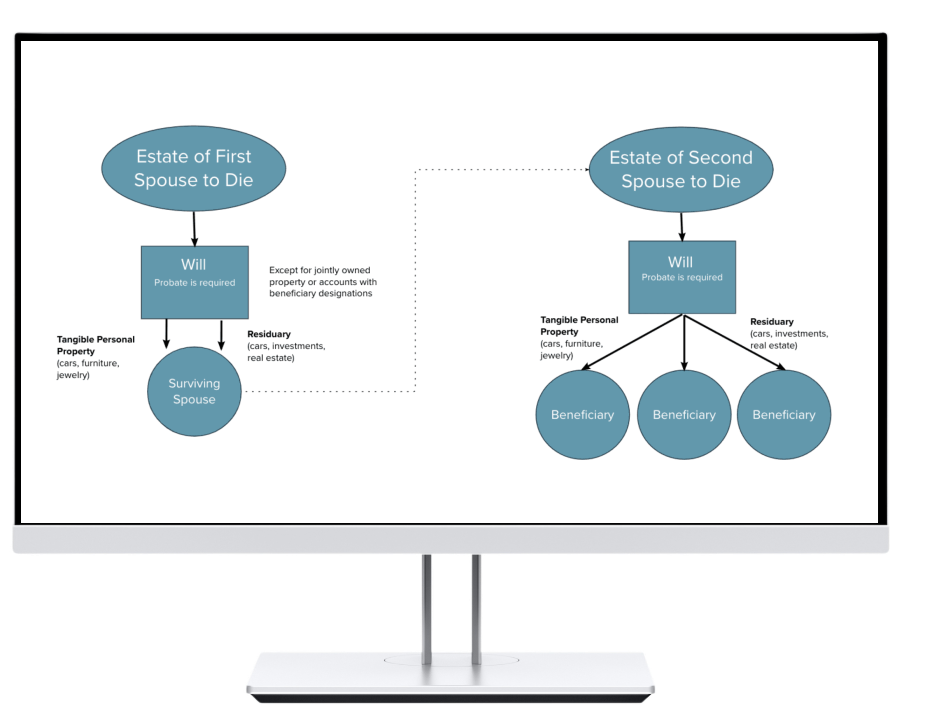
need an example?
Get a look at a sample estate planning diagram!
Estate Planning Coordination vs. Document Drafting
Ascent Financial Group does not draft legal estate documents. Instead, our role is to coordinate with your estate attorney and other professionals to ensure your plan functions as intended. By reviewing beneficiary designations, account titling, and investment strategy alongside your legal documents, we help reduce gaps between the written plan and real-world financial decisions.
What Legacy Planning Coordination Includes
Clients working with Ascent Financial Group typically receive support that includes:
Beneficiary designation review
Asset titling and ownership review
Trust planning coordination with attorneys
Wealth transfer planning considerations
Charitable giving strategy coordination
Alignment between estate planning and investment strategy
Common Questions About Legacy Planning
How often should I review my estate plan?
You should review your estate plan at least every 3–5 years, or sooner if you experience a major life change—like marriage, divorce, the birth of a child, a significant change in assets, or the death of a loved one.
Regular reviews ensure your plan reflects your current wishes, aligns with your financial goals, and takes advantage of any changes in laws or tax rules. Keeping your estate plan up to date helps protect your family and ensures your legacy is handled according to your intentions.
How do charitable strategies fit into estate planning?
Charitable strategies can play an important role in estate planning by allowing you to support the causes you care about while potentially reducing taxes for your estate or heirs. This can include charitable bequests in your will, establishing a donor-advised fund, or making gifts during your lifetime.
By integrating charitable giving into your estate plan, you can create a lasting impact, align your legacy with your values, and take advantage of strategies that may help minimize estate or income taxes.
Do I need both estate planning and financial planning?
Yes—estate planning and financial planning work best together. Financial planning focuses on building, managing, and growing your wealth to reach goals like retirement, education funding, or major purchases. Estate planning, on the other hand, ensures that your assets are distributed according to your wishes, your loved ones are protected, and taxes or legal issues are minimized.
By coordinating both, you create a comprehensive strategy that not only helps you achieve your financial goals during your lifetime but also preserves your legacy for the people and causes you care about most.